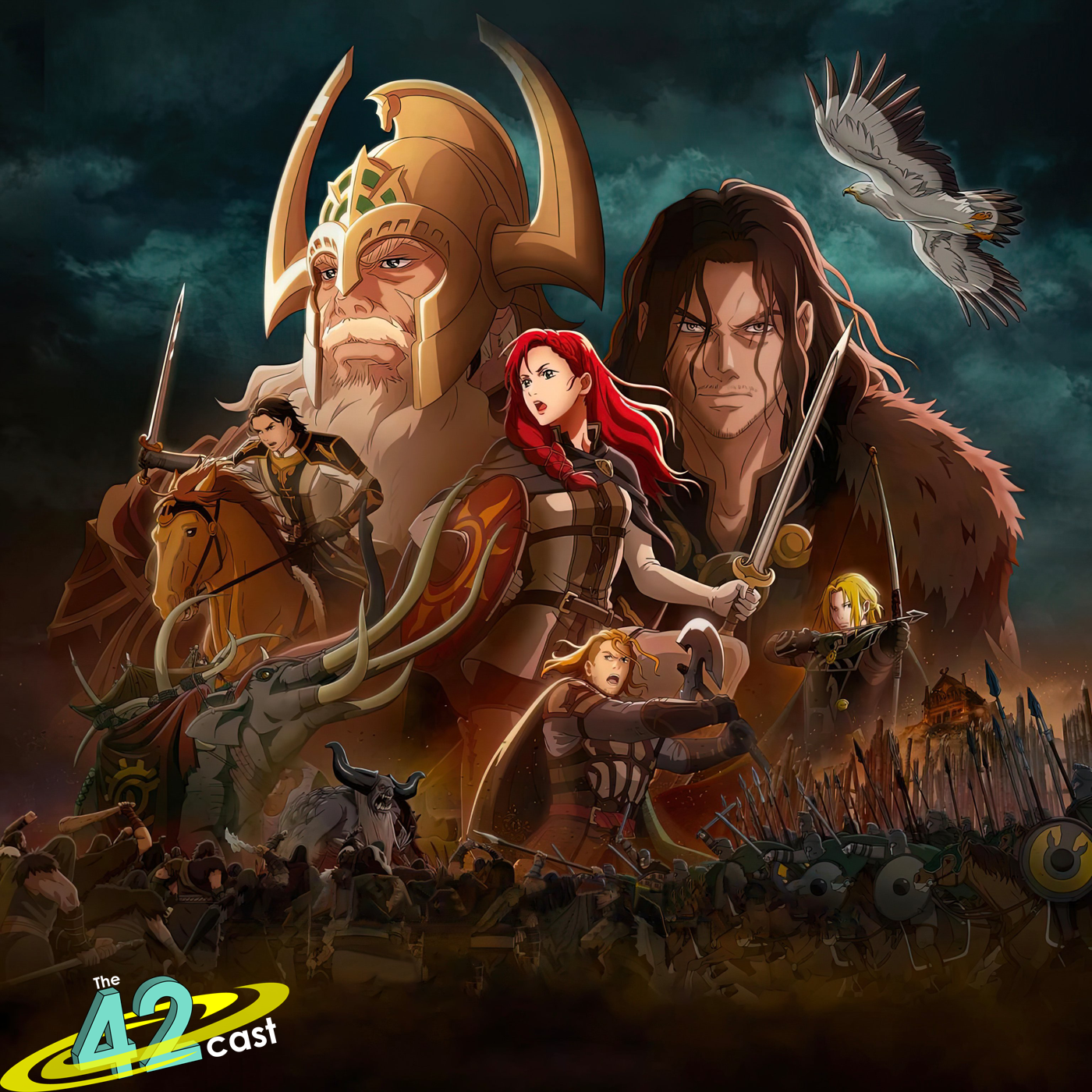
 The War of the Rohirrim was the first attempt by Warner Bros to extend the use of their Middle-Earth license to include stories beyond the written works of The Hobbit and Lord of the Rings. Set 180 years before the events of The Lord of the Rings, it tells the story of how Helm’s Deep got its name and showcases the daughter of Helm, Hera. Conceived as an anime, the script was written in English and animated by a Japanese studio with a Japanese director. In this episode we review the movie. We discuss it as an adaptation of very scant material from Tolkien’s written work. We talk about how well it fits into the narrative of Middle-Earth and Tolkien’s style. We opine on the characters, the plot, and the performances. We also debate the merits of the animation and the music. Along the way we’ll get into the fashions, tactics in personal combat and warfare, and the touchstones to other parts of the franchise.
Due to time constraints there is no five-minute controversy this week.
This week Beth; Keith; and newcomer, Annie, join the cast.
Like what you heard? Follow us on Facebook at www.facebook.com/42cast. You can also find us on X as @42cast, Instagram/Threads as 42cast, or Blue Sky as 42cast.bsky.social. We can also be found on Pandora, Amazon Music, Youtube, Spotify, and Apple Podcasts. Please, leave us a review. Have a question for the Ultimate Answer? E-mail us at [email protected].
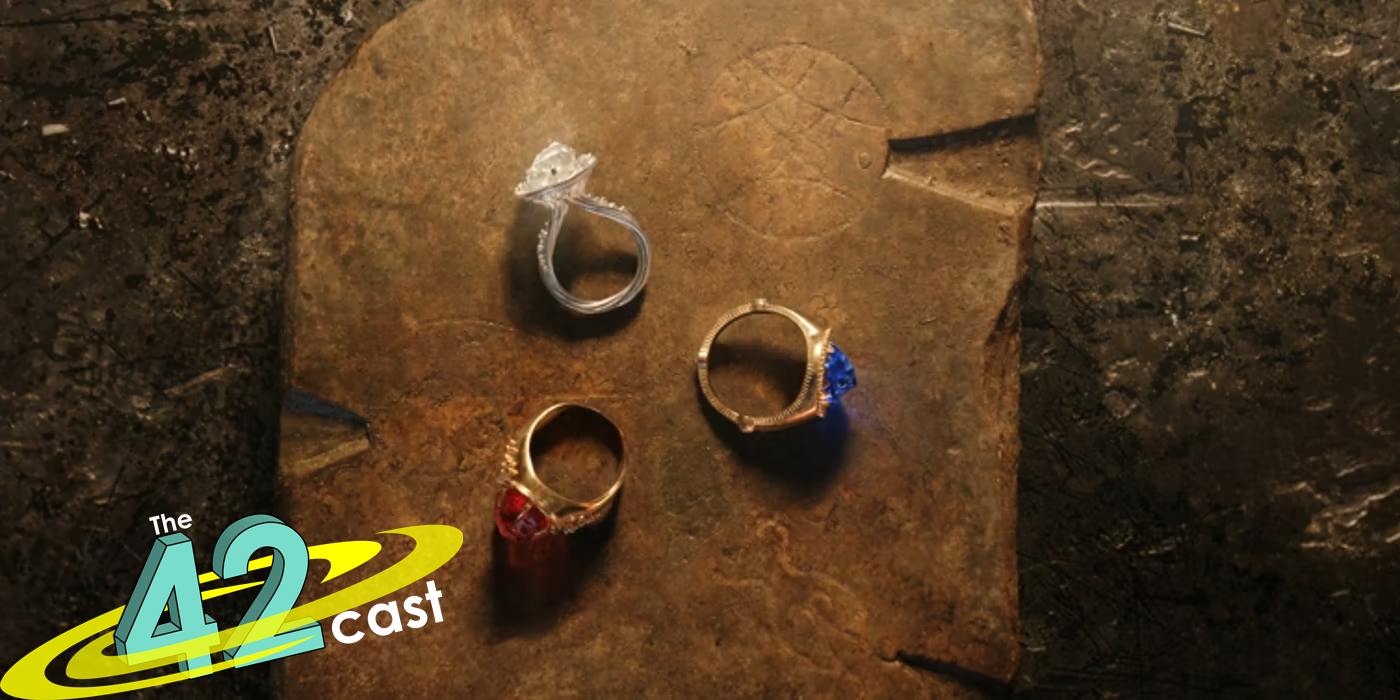 In this second part of our two-part extravaganza on The Rings of Power the cast jumps back into talking about Middle Earth. In this episode they ask “What’s in a name?” as they wonder why anyone included a Hobbit. The Stranger’s gray identity is mooted. The cast discusses the geometry of rings and why 15 minutes may not be enough time to devote to their creation. They also get into the trauma that creates the orcs and the idea of an “evil race”. Along the way they discuss tropish women who need fathers for their sons, vampire orcs, and the politics of Númenor.
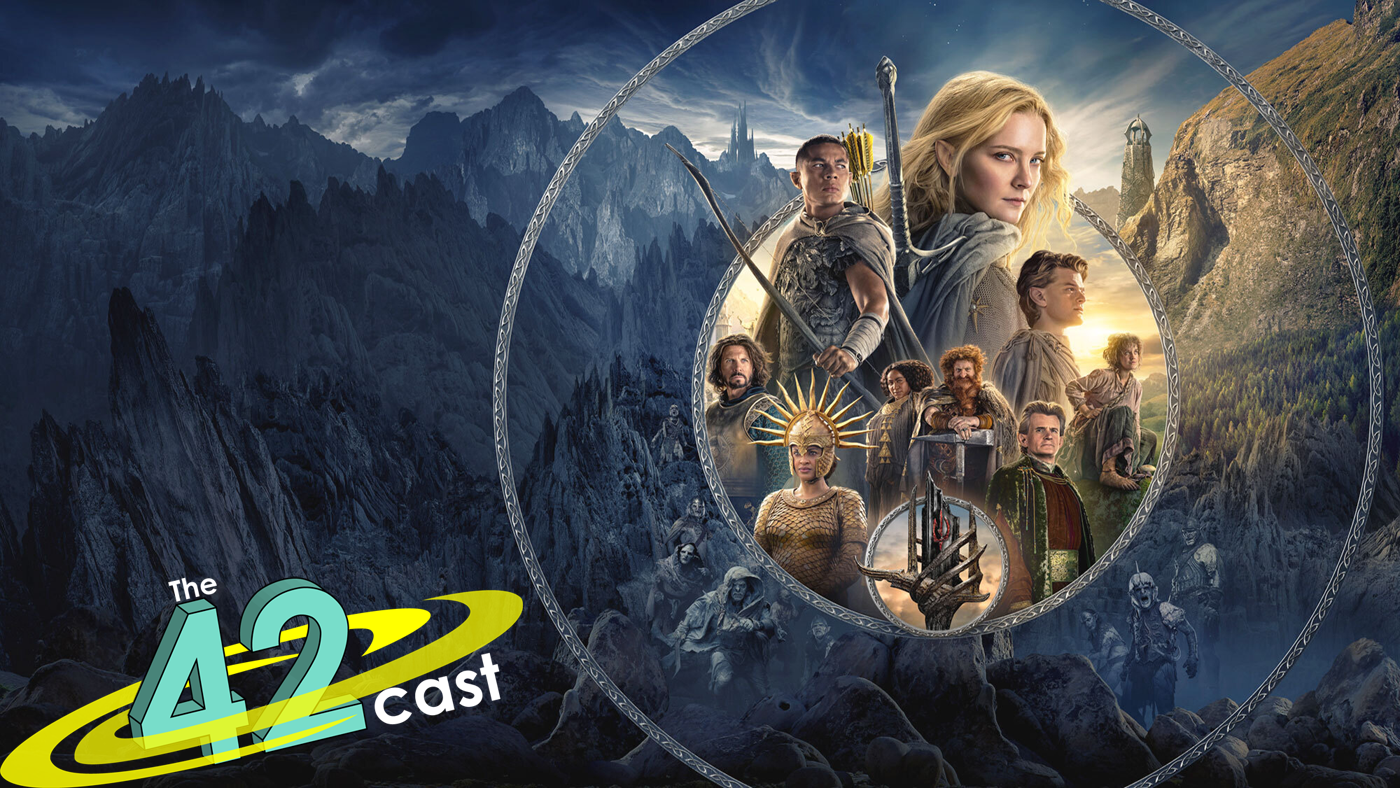 It’s a trip back to Middle-Earth this week as the cast takes an epic-length at the Amazon Prime series, The Rings of Power. In this episode the cast discusses the logic of a series that can only use the appendices of Lord of the Rings as reference. They get into the types of stories that they’re choosing to tell and whether or not there’s a significant loss of context. Along the way they also get into the casting and what they think of the portrayal of the characters. They also opine on the production values and the various controversies that surrounded this series.
 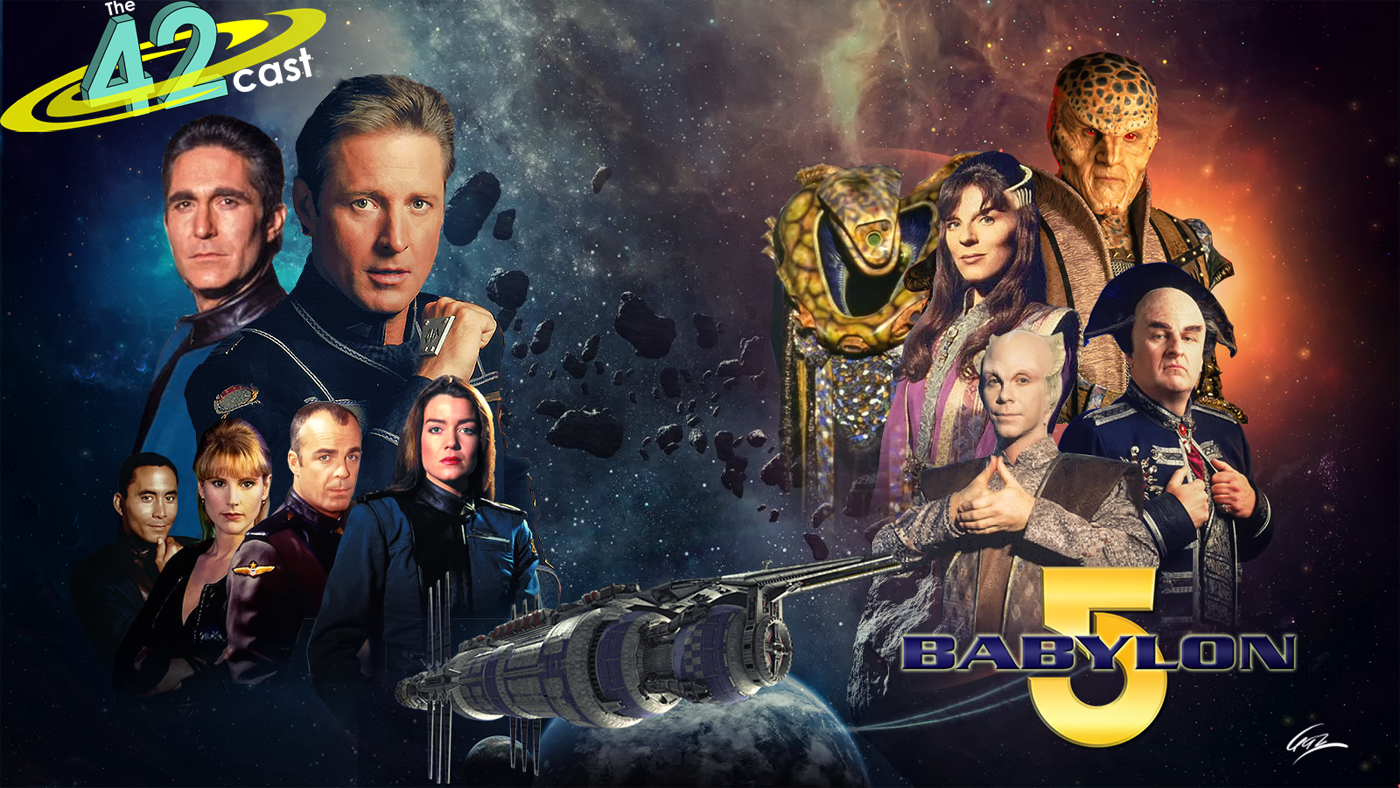 >Babylon 5 created a revolution in television in the mid-90’s. Series creator J. Michael Stracynski was told that science fiction would never succeed on television if it wasn’t Star Trek. Yet, the man had a dream and he fulfilled that dream. Conceiving of a series that would last for five years with a defined beginning, middle, and ending Babylon 5 succeeded in its mission by providing complex, interwoven story arcs in an era when television was almost completely full of stand alone episodes. In this episode we do a deep dive on Babylon 5. We discuss what made the series both revolutionary and successful. We also talk about the characters, what we think worked and what we think didn’t, and whether we think the series should be rebooted.
 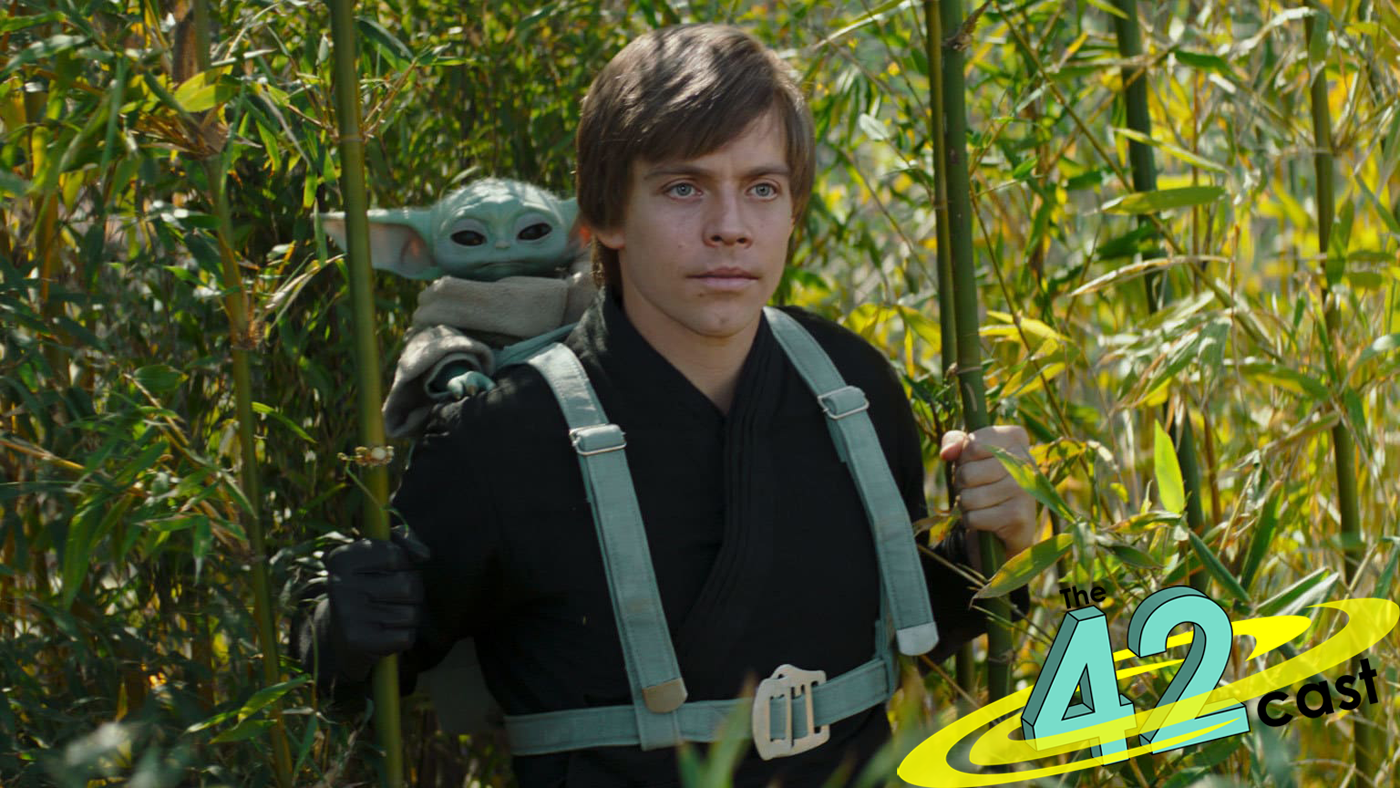 From Respeecher to Deep Fakes, we hear about it all the time. The technology continues to develop, so that studios can recreate the faces and voices of actors that have passed or aged out of certain roles. In this episode we discuss the implications of this technology. We talk about what it could mean for acting as a profession, the ramifications to live-action franchises, and whether it’s something that audiences really require. We also opine on the pros and cons of recreating a particular actor in a role or recasting.
 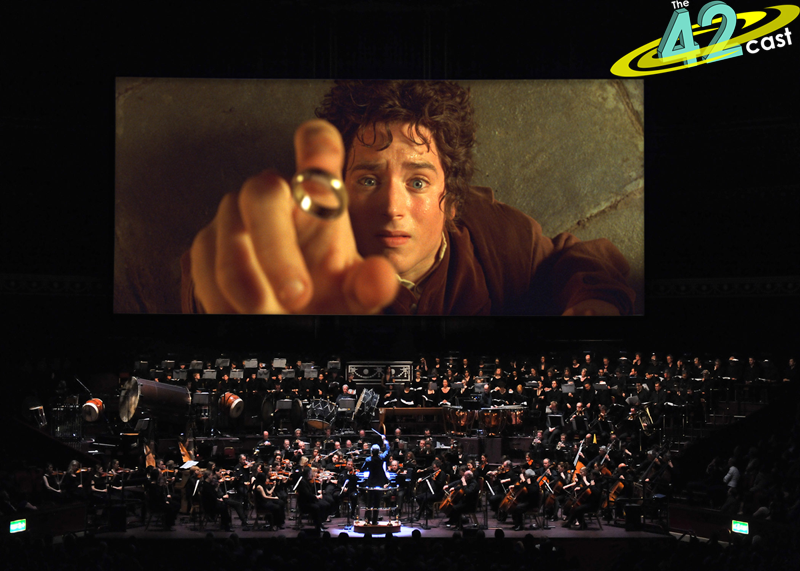 Movie scores and soundtracks add a new dimension to a film. A well-done soundtrack can make a good movie into a great movie. A bad soundtrack can ruin a movie. In this episode we discuss composers and individual movie scores that we love.
  Our epic length recording about the life and works of legendary author, J.R.R. Tolkien, comes to a close. In this episode we ask whether The Hobbit truly needed to be three films. We also discuss the musical language of the Lord of the Rings movies. Bree mentions what it’s like to live near so much Tolkien history. Anji laments missing her chance to hear Billy Boyd sing in person Stephanie discusses similarities between names in Babylon 5 and Lord of the Rings. Stick around, because we have outtakes after the episode!
  We move on to part two of our discussion of J.R.R. Tolkien and his works. This time we talk about Tolkien’s love of language, and how that makes for a more convincing world and makes it more interesting to read. We also discuss diversity within Lord of the Rings, modern interpretations of the text, the overall theme of the story, and the character assassination of Faramir.
 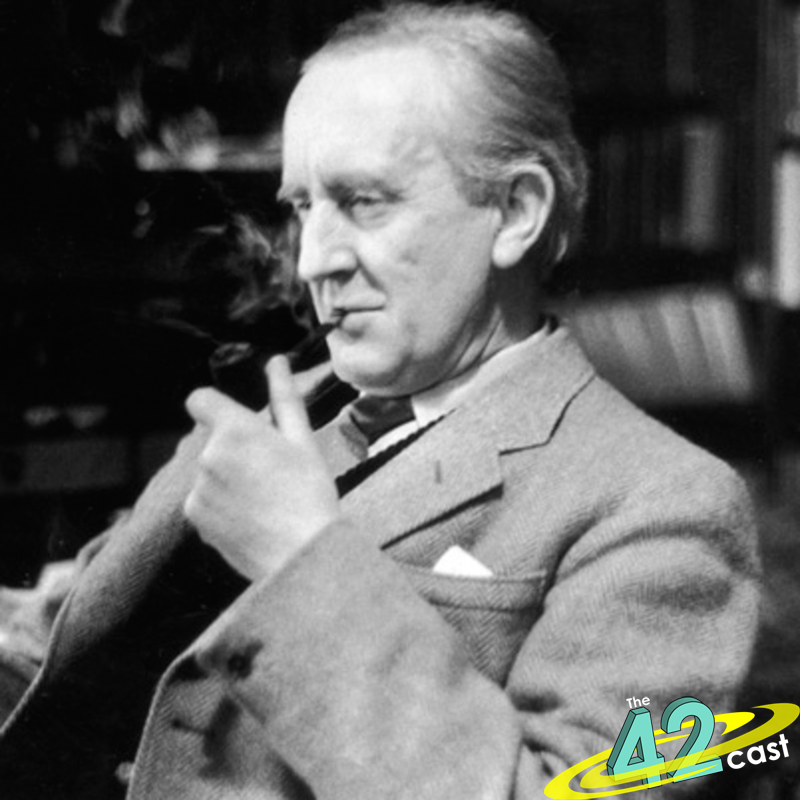 Over 65 years ago, Fellowship of the Ring, the first book in J.R.R. Tolkien’s Lord of the Rings epic was published and literature would never be the same. That one work changed the way that fantasy literature was written and received by the public. It propelled a quiet academic into the public eye and has spawned a plethora of adaptations, interpretations, and imitations. In this episode and the three that follow we take a look at Tolkien’s life and the influences that helped inform his writing style. We’ll also talk about his many books and works, including those published posthumously, and we’ll discuss the various animated and live-action adaptations.
  Back in 2015, Marvel and Sony announced an unprecedented deal to allow Marvel to use Spider-Man in their movies and for Marvel to allow Sony to use some of their characters in a Spider-Man movie. No money changed hands, and both studios reaped the rewards. This week we dive into Spider-Man: Homecoming and how it stacks up to previous attempts to do Spider-Man on film. We talk about how this version of Spider-Man fits into the MCU and why we’re so glad that we didn’t see yet another origin story. We also talk about the stellar work of Michael Keaton as the Vulture and speculate on what the sequel holds for our wall-crawling hero.